Advanced Golfer’s Elbow Treatment in Salford
Pain on the inside of your elbow can gradually build until gripping, lifting, typing, or training feels unreliable. At Bode Clinic, our Golfer’s Elbow Treatment in Salford begins with a clear assessment to understand why your symptoms developed and what your arm currently tolerates. You do not need to play golf to experience this condition; it commonly affects gym users, tradespeople, and desk-based professionals. Rather than advising complete rest, a structured rehabilitation plan is used to settle irritation while progressively rebuilding strength, helping you return to work and sport without repeated setbacks.
Ready to feel confident in your grip again?
What Is Golfer’s Elbow?
Golfer’s elbow, medically known as medial epicondylitis, is a tendon overload condition affecting the inner elbow where the forearm flexor muscles attach.
It usually develops gradually when the tendon is exposed to more load than it can tolerate. Common triggers include:
- Increasing gym intensity or pulling volume
- Repetitive gripping with tools
- Long hours at a keyboard and mouse
- Returning to golf, climbing, or racket sports after time off
Despite the name, it is rarely a sudden injury and is not typically driven by active inflammation. More often, the tendon simply needs structured, progressive loading to adapt again.
Is It Definitely Golfer’s Elbow?
Not all inner elbow pain is caused by tendon overload.
Other possible causes include:
- Ulnar nerve irritation (tingling into the ring or little finger)
- Referred symptoms from the neck
- Joint irritation
- Other forearm tendon issues
An accurate assessment ensures the right plan is followed. If you would like to explore the wider range of conditions we assess and manage:
Common Symptoms of Inner Elbow Tendon Pain
Typical signs include:
- Tenderness over the inner elbow
- Ache spreading into the forearm
- Pain when gripping, lifting, or carrying
- Reduced grip strength
- Stiffness after rest
- Discomfort bending the wrist against resistance
If swelling, trauma, marked weakness, or nerve-type symptoms are present, assessment is recommended promptly.
Why Inner Elbow Pain Often Returns
A common pattern is short-term improvement followed by recurrence once normal activity resumes.
This often happens because:
- Full training is resumed too quickly
- A brace is used without rebuilding strength
- Shoulder weakness increases strain at the elbow
- Workload suddenly spikes
Tendons adapt gradually. Sustainable progress usually comes from graded loading rather than extremes of rest or overload.
Golfer’s Elbow Treatment in Salford: Step by Step
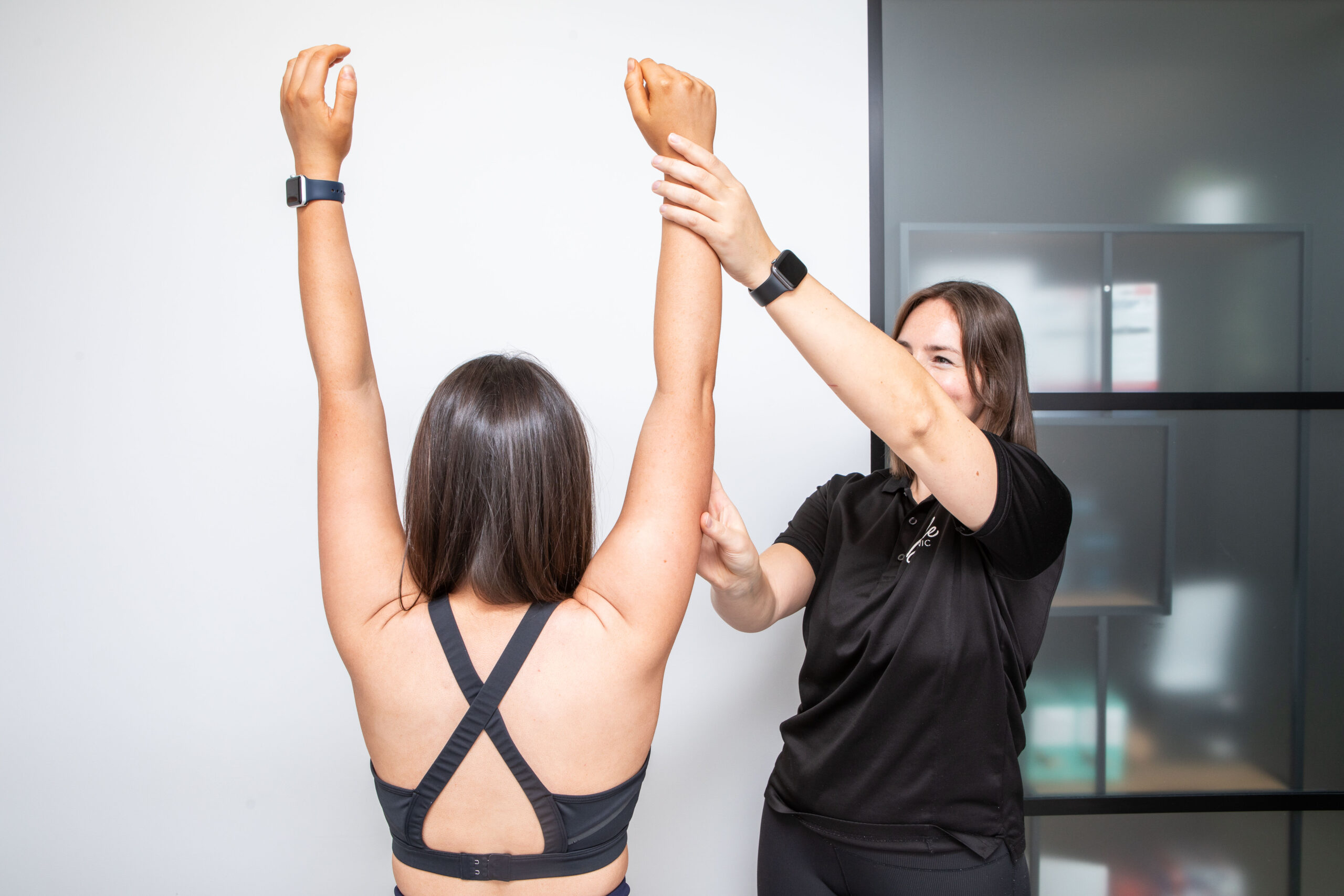
A detailed evaluation is carried out through our Physiotherapy service. Grip strength, pain response, shoulder control, and workload demands are assessed.
Load is modified so symptoms calm without unnecessary deconditioning. Clear guidance is provided on what to adjust and what can safely continue.
Strengthening begins at a manageable level and progresses gradually to restore tendon capacity and grip resilience.
Training mechanics, shoulder strength, and workstation setup are addressed to reduce repeated flare-ups.
If you would like to understand how appointments are structured, see What to expect during your first physiotherapy page.
Supportive Treatments That May Be Used
Depending on assessment findings, your plan may include:
- Targeted rehab via Physiotherapy
- Short-term activity support using Strapping & Kinesio taping
- Muscle support through Sports massage
- Advanced loading progression with Functional exercise rehab
- Injection therapy (corticosteroid for acute flare or hyaluronic acid for persistent tendon/joint issues), delivered under ultrasound guidance for precision when pain is severe and slowing rehab.
- Acupuncture is a treatment option to support pain relief and recovery.
Only appropriate services are recommended based on your needs.
Do Braces or Straps Fix the Problem?
A counterforce strap (sometimes called a golfer’s elbow brace) can reduce strain during gripping tasks by redistributing load through the forearm muscles.
It may help:
- Reduce discomfort during work
- Improve tolerance during sport
- Provide short-term relief in the early stages
However, it does not:
- Repair the tendon
- Increase strength
- Improve long-term load tolerance
Think of it as a temporary support rather than a solution. Lasting improvement typically comes from progressive strengthening.
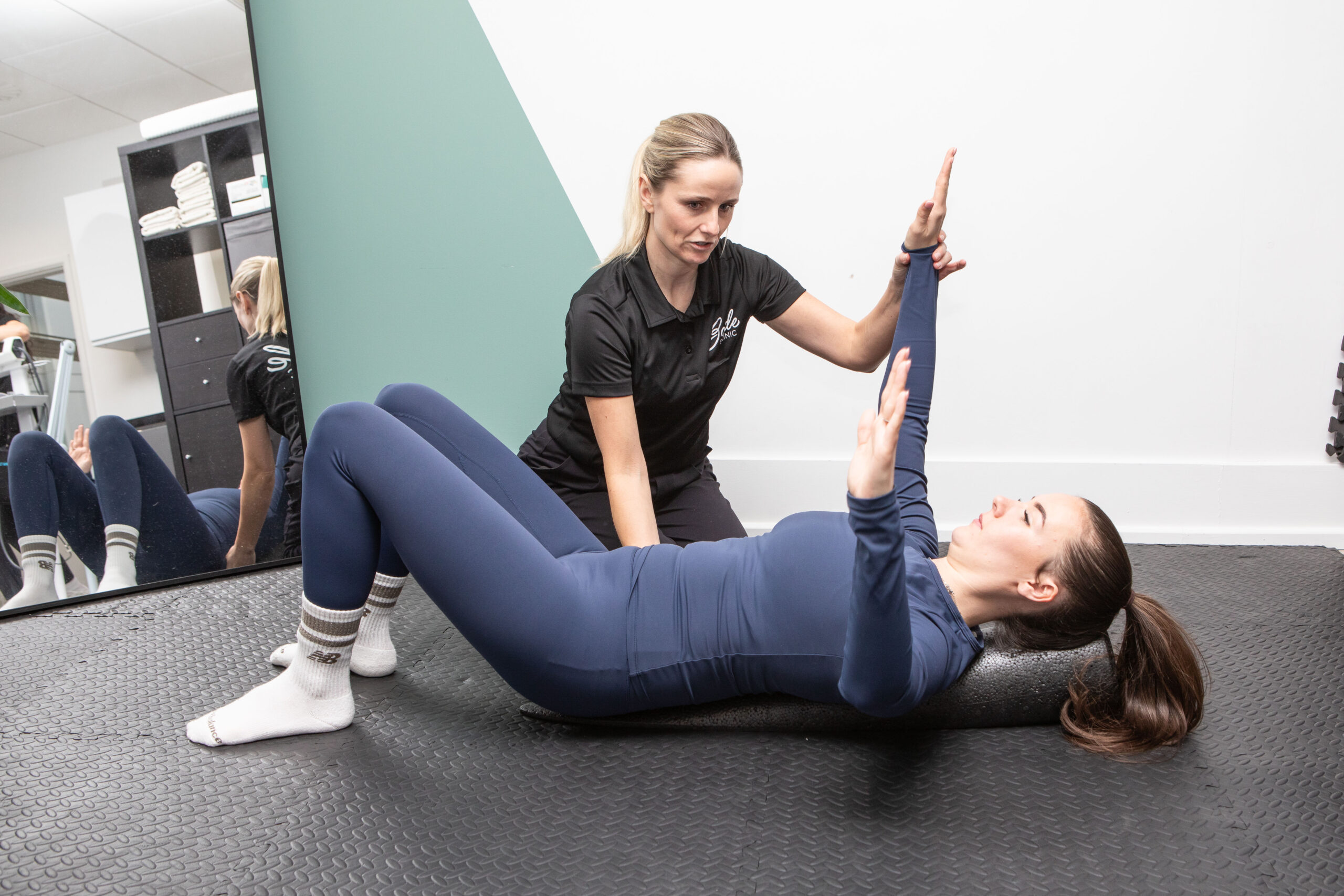
The Exercise Principles That Actually Work
Recovery does not depend on complicated routines. It depends on applying the right principles consistently.
Effective rehabilitation usually includes:
- Starting with a tolerable load
- Gradually increasing resistance
- Strengthening both the forearms and the shoulders
- Building grip tolerance steadily
- Avoiding sudden activity spikes
The aim is not just to reduce pain, but to increase what your arm can reliably handle. In most cases, steady progression outperforms complex programmes or aggressive stretching.
If you are unsure where to begin, or your current exercises are not improving things, getting clear direction can prevent months of frustration.
Golfer's Elbow vs Tennis Elbow: What’s the Difference?
These two conditions are often confused, especially in the early stages.
The main difference is where the pain is felt:
- Golfer’s elbow typically affects the inside of the elbow
- Tennis elbow usually affects the outside of the elbow
Both involve tendon overload, but they affect different muscle groups and can respond slightly differently to exercise selection and loading strategy.
Pain location is often the clearest guide:
- Inner elbow pain during gripping → more likely golfer’s elbow
- Outer elbow pain during gripping → more likely tennis elbow
If you are still unsure which one matches your symptoms, you can read a more detailed breakdown through our Tennis elbow vs golfer’s elbow page.
Getting the diagnosis right matters, as the rehab focus and progression can vary depending on which side of the elbow is involved.
Frequently Asked Questions
How long does recovery take?
Mild cases may improve within weeks. Longer-standing symptoms can take several months, depending on consistency.
Should I stop lifting weights completely?
Not usually. Exercises are modified rather than eliminated.
Can it be resolved without treatment?
Some mild cases settle, but persistent symptoms often require structured rehab.
Is it an inflammatory condition?
Most cases relate to tendon overload rather than active inflammation.
Does massage cure it?
Massage may ease tension, but does not replace strengthening.
Can office work contribute?
Yes. Repetitive mouse use and wrist positioning can increase strain.
Are injections necessary?
They may be used if pain is severe and slowing rehab, either corticosteroid or hyaluronic acid, under ultrasound guidance when appropriate.
What exercises should I avoid early on?
Heavy gripping and high-load pulling movements are often modified.
Can nerve symptoms occur alongside it?
Tingling or numbness suggests possible nerve involvement and should be assessed.
Can I keep playing golf?
Often yes, with load modification and staged progression.
Take the First Step Toward Stronger, Pain-Free Movement
Inner elbow pain rarely improves by chance alone. A clear plan provides measurable progress, structured loading, and confidence when returning to work or sport. Our Golfers Elbow Treatment in Salford focuses on identifying the true driver of your symptoms, restoring tendon strength progressively, and preventing the repeated flare-ups that disrupt performance and daily life. If grip weakness or lifting discomfort is holding you back, now is the time to move forward with clarity and a plan built around your goals.